🧪 Perc Testing in Marshalltown, IA
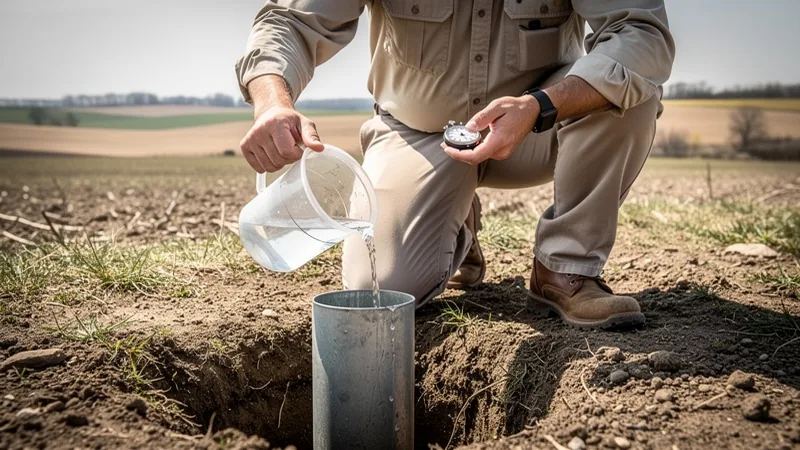
Marshalltown Septic provides perc testing in Marshalltown, IA.
Iowa Time-of-Transfer Certified · Residential and Farm Septic · Free Estimates
Soil percolation testing, required before installing a new septic system, to confirm the soil can actually absorb drain field effluent.
A percolation test measures how fast water drains through the soil at a proposed drain field site, which determines whether a standard system will work or a larger/engineered system is required. Marshall County requires this before permitting new construction or a full system replacement. Given the glacial till soils common across the county, results vary more by specific lot than people expect, we've tested neighboring properties with meaningfully different drainage. We coordinate the test with Marshall County's permitting office and give you the result in time to plan the rest of the build.
📞 Call (641) 354-5927Frequently Asked Questions
How often should a septic tank be pumped in Marshall County?
Most homes in and around Marshalltown should pump every 3 to 4 years, but the real answer depends on tank size and how many people live in the house. As a rough guide for a 1,000-gallon tank: about every 5 to 6 years for two people, every 3 to 4 years for three, and every 2 to 3 years for four or more. Many older farmhouses in Marshall County still have 1,000-gallon tanks, smaller than the 1,250 gallons Iowa now requires for a new three-bedroom home, so they fill faster than people expect. Farm properties with livestock washdown or a second dwelling belong at the short end. If you can't remember the last pumping, it's probably overdue.
Do you service farm and acreage properties, not just in-town homes?
Yes. A large share of our calls come from farms and acreages across Marshall, Tama, Hardin, and Story Counties, not just in-town Marshalltown addresses. Farm systems often see higher water volume than an in-town home, so we check tank sizing against household and livestock use.
What are the signs a septic tank needs pumping?
Slow or gurgling drains, a sewage odor near the yard or basement, soggy or unusually green patches over the drain field, and sewage backing up into a basement floor drain or tub.
How much does septic tank pumping cost near Marshalltown?
There is no official Marshalltown price list; published U.S. figures put a standard pump-out at about $295 to $610, around $375 on average; tank size and access move the price. The provider confirms the price for your property before the visit.
Do you handle Iowa Time of Transfer inspections for farm sales?
Yes. Iowa's Time of Transfer law applies to farm and acreage sales just like in-town home sales whenever there's a private septic system. We provide certified inspections across Marshall, Tama, Hardin, and Story Counties, typically within 3 to 5 business days.
What towns do you serve around Marshalltown?
Marshalltown and the rest of Marshall County, plus nearby farms and acreages in Tama, Hardin and Story Counties. Most incorporated towns in the county have city sewer, so our work is mainly on properties outside those systems; see the Rural Marshall County page for which towns have municipal wastewater treatment.
Do you offer emergency septic service outside Marshalltown city limits?
Yes, 24/7. In-town Marshalltown addresses usually get a truck within 90 to 120 minutes; outlying county addresses are typically same-day.
Do I need a perc test before installing a new septic system in Marshall County?
Yes. Marshall County requires a percolation test before permitting new construction or a full system replacement, to confirm the soil can absorb drain field effluent at a safe rate. We coordinate the test with the county permitting office as part of new installations.
What's the difference between a septic tank problem and a drain field problem?
The tank holds and separates waste; the drain field (leach field) is where treated liquid disperses into the soil, and it's a separate system. Slow drains right after a pump usually point to the tank or a clog. Soggy ground, sewage odor outside, or unusually green grass over the field even in dry weather point to the drain field instead, and that's a different repair than a tank issue.
Can a septic tank go 20 years without being pumped?
It can keep flushing that long, which is why people assume it's fine, but the tank isn't doing its job. Once sludge and scum fill most of the tank, solids wash out into the drain field and slowly seal the soil. Around Marshall County this often surfaces on older farmhouses during a Time of Transfer inspection, when the tank gets pumped for the first time in decades. Pumping is a few hundred dollars; a clogged drain field usually means replacing it. If it's been 20 years, have the tank pumped and the baffles and field checked in the same visit.
Do septic systems freeze during an Iowa winter?
The tank itself rarely freezes. What usually freezes is the pipe between the house and the tank, especially at a low spot where water sits, or a shallow drain field in a cold winter with little snow cover. Warning signs are drains that slow down or gurgle during a cold snap and backups into a basement floor drain. To prevent it: don't plow, park or drive over the tank and field, leave snow on top as insulation, fix dripping fixtures that send a trickle down the line, and keep normal daily water use going if you leave for a few days. Never pour antifreeze or salt into the system.
What makes a system fail an Iowa Time of Transfer inspection?
Iowa's Time of Transfer rule mainly targets systems with no secondary treatment, for example an old farm tank that discharges straight into a field tile, a ditch or a creek, and systems whose secondary treatment (drain field or sand filter) has failed. Sewage surfacing in the yard, a cracked tank or broken baffles are also common findings. An older system with a working drain field does not have to meet today's code as long as it isn't creating a health or environmental hazard. If it fails, the buyer, seller and realtors are told what has to be repaired or replaced, and that work is part of the sale.
How long does a Time of Transfer inspection take, and how long is the report good for?
The site visit itself is usually a few hours: the inspector locates every part of the system, pumps the tank, checks its condition and runs a load test on the drain field. Iowa inspectors then have up to 10 days to file the written report, so book it well before your closing date, and don't count on a waiver: waivers are reserved for cases like frozen ground or a planned replacement, not a late inspection. A report on a system that passed is generally valid for two years for a later sale, as long as nothing on the property changed. Check with the county environmental health office for its exact rules.
Why does septic pumping cost more on some rural properties?
The pumping itself is similar everywhere; the extra cost comes from what it takes to get to the tank. Lids buried a foot or more underground have to be dug up, long gravel drives and soft spring ground make truck access harder, larger farm tanks or two-compartment tanks hold more to haul away, and some acreages have a second tank or a lift station. Installing a riser so the lid sits at ground level costs once and saves the digging charge on every future pumping.
Who regulates septic systems in Marshall County?
The rules for private septic systems are set statewide by the Iowa Department of Natural Resources, and the county environmental health office applies them locally: it issues permits for new and replacement systems, reviews perc tests and keeps Time of Transfer records. Septic tank pumpers must hold an Iowa DNR license, and Time of Transfer inspections have to be done by a DNR-certified inspector, so ask for the license or certification number before work starts.
Which property sales are exempt from Iowa's Time of Transfer septic inspection?
Iowa Code 455B.172 lists the exemptions. The common ones: transfers between spouses or to a child, parent or grandchild; transfers between joint tenants or as part of a divorce decree; transfers by an executor, trustee, guardian or conservator; court-ordered transfers and foreclosures; county tax sale deeds; sales for $500 or less; sales where the buyer intends to demolish the building; and properties whose septic system was installed within the past two years. Any other sale of a home or building on a private septic system, farms and acreages included, needs an inspection by a DNR-certified inspector before the deed transfers. If you think an exemption applies, tell your realtor or closing attorney early so it's handled in the closing paperwork.
How much does a Time of Transfer inspection cost in Iowa?
There's no state price: each DNR-certified inspector sets their own. The inspection normally includes pumping the tank so its condition can be checked, locating every part of the system and load-testing the drain field, so the total depends mostly on tank size, how hard the tank is to find and uncover, and travel out to the property. A farm system with no records and buried lids takes longer than an in-town system with risers. We quote the full price, pumping included, before scheduling.
Do I need a permit to repair or replace a septic system in Marshall County?
Yes for a new system and for replacing a tank or a drain field: the county environmental health office issues the permit, usually after a soil evaluation or perc test, and checks the work before it's covered. Routine pumping, cleaning an effluent filter or replacing a cracked lid doesn't need one. If you're not sure whether a repair counts, call the county before digging: work done without a permit tends to surface later, in a Time of Transfer inspection when the property is sold.
What size septic tank do I need for a 3 or 4 bedroom house in Iowa?
Iowa sets the minimum by bedrooms, not by the number of people (Iowa Administrative Code 567-69.8): 1,250 gallons for a home with up to three bedrooms, 1,500 gallons for four, 1,750 for five and 2,000 for six. The tank also has to be split into two compartments and fitted with an effluent filter on the outlet. So a 1,500-gallon tank is the minimum for a four-bedroom house. On a farm with livestock washdown, a large household or a second dwelling on the same system, it's worth sizing above the minimum.
Why is my septic alarm going off?
The alarm sits on systems with a pump tank, common with mound systems and sand filters, and means the water level is higher than it should be. Usual causes: the effluent pump or its float switch has failed, the pump's breaker tripped, the pump screen is clogged, or a lot of water arrived at once, such as several loads of laundry or rainwater getting into the tank. Press the silence button, keep water use to a minimum and check the breaker. If the alarm comes back on within a few hours, call us: a pump tank that keeps filling will eventually back up into the house.
Why does my septic system smell after it rains, or inside the house?
After rain, a smell in the yard usually comes from low air pressure keeping the gases from the roof vent close to the ground, or from a saturated drain field that can't absorb effluent. Inside the house, the most common cause is a dried-out trap, for example a basement floor drain nobody uses: pour a bucket of water into it. A leaking wax ring under a toilet or a blocked vent are next on the list. A strong smell together with slow drains, gurgling or soggy spots over the drain field means the system itself needs attention.
My septic tank is full of water after heavy rain. What should I do?
A septic tank is always full up to the outlet pipe, and that's normal. The problem is water standing above the outlet: it means the drain field is saturated or failing, or rainwater is getting in through lids, risers or cracks. Cut water use, keep downspouts and sump pump discharge away from the tank and drain field, and don't have the tank pumped while the ground is waterlogged, because an empty tank in saturated soil can shift or even float, plastic tanks especially. If the level hasn't dropped a few days after the rain stops, have the drain field checked.
How much does it cost to replace a drain field in Iowa?
It depends on the soil, the size of the house and the type of system the county requires. A conventional trench drain field replacement in Iowa usually runs about $4,000 to $12,000; a mound or sand filter, required where the soil percs poorly or the water table is high, costs more. Before replacing, check whether the field can be saved: a clogged effluent filter or a tank that hasn't been pumped in years can make a healthy field look like it failed.